While air traffic is the new public enemy for climate activits, leading to the neologism of "flygskam" or "shame of flying", a french study finds that other activities are far more harmful for climate.
Digital industry accounts for 4 % of greenhouse gas emissions and therefore higher than air traffic emissions.
As an astonishing example GreenIT states that streaming a video on your smartphone for an hour corresponds to the annual consumption of a refrigerator.
Another big problem so far not solved is the issue of non recyclable minerals used in computerscreens and batteries like antimony or zinc.
"Dans une étude rendue publique lundi 21 octobre, le cabinet militant GreenIT,
qui regroupe des associations de protection de l’environnement et des
experts, montre que l’industrie numérique produit 4% des émissions
mondiales de gaz à effet de serre (4 fois plus que la France) Ce chiffre est aussi sensiblement supérieur à celui du transport aérien.
Compte tenu de la croissance rapide du numérique, ces émissions de gaz à
effet de serre devraient doubler d’ici 2025, dans seulement six ans, et
dans le même temps cette industrie multipliera par trois son impact
environnemental notamment par l’utilisation de matières premières.
Car il faut prendre en compte dans le calcul, non seulement la
production d’électricité pour faire fonctionner les réseaux, pour
utiliser, stocker et échanger des données numériques de plus en plus
rapidement et de plus en plus nombreuses et pour recharger les
batteries, mais aussi le coût pour l’environnement de la production même
des équipements numériques, téléphones, consoles, tablettes,
ordinateurs, serveurs, relais de télécommunications…"
You can read the rest of the piece via the below link:
https://www.transitionsenergies.com/numerique-plus-co2-transport-aerien/?fbclid=IwAR1GBLyIdcpWbtsfhtIC9vFol9JbEJFFaru0Teo0jwA9Fm_AwqwqU4PDF7M
You can find the study (french/english version) via this link:
https://www.greenit.fr/empreinte-environnementale-du-numerique-mondial/
"Angola wants to cash in on the roughly 3 billion cubic feet per day of
associated natural gas it produces, most of which is now flared, the
petroleum minister said on Wednesday.
(...)
The U.S. Energy Information Administration (EIA) in June said Angola’s
total natural gas output in 2016 was 413 billion cubic feet, of which
254 billion cubic feet was flared, 88 billion cubic feet was reinjected
and 60 billion cubic feet sold. The EIA cited figures from gas data firm
Cedigaz."
You can read the rest of the piece via the below link:
https://www.reuters.com/article/us-africa-oil-angola/angola-seeks-to-reduce-gas-flaring-to-capture-revenue-idUSKBN1WO115
German company Rhein Petroleum GmbH announces that according to their estimations
the oilfield "Steig 1" near Weingarten in south Germany can be exploited profitably.
British company Neptune Energy for her part announces further drilling operations and the extension of the production facility on the field "Ringe" near Nordhorn in Lower Saxony.
See more information via the below link:
https://www.erdoel-erdgas-deutschland.de/bohrung-steig-1-wirtschaftlich-oelfuendig/
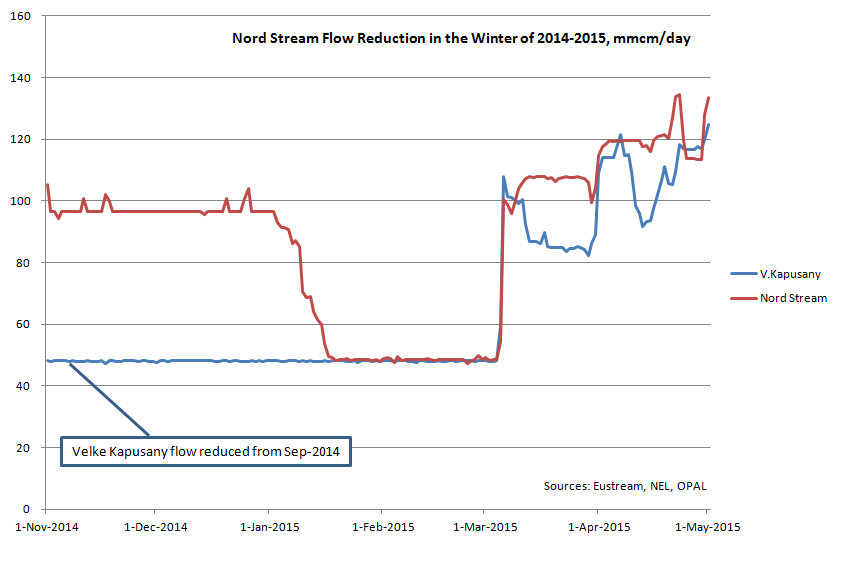
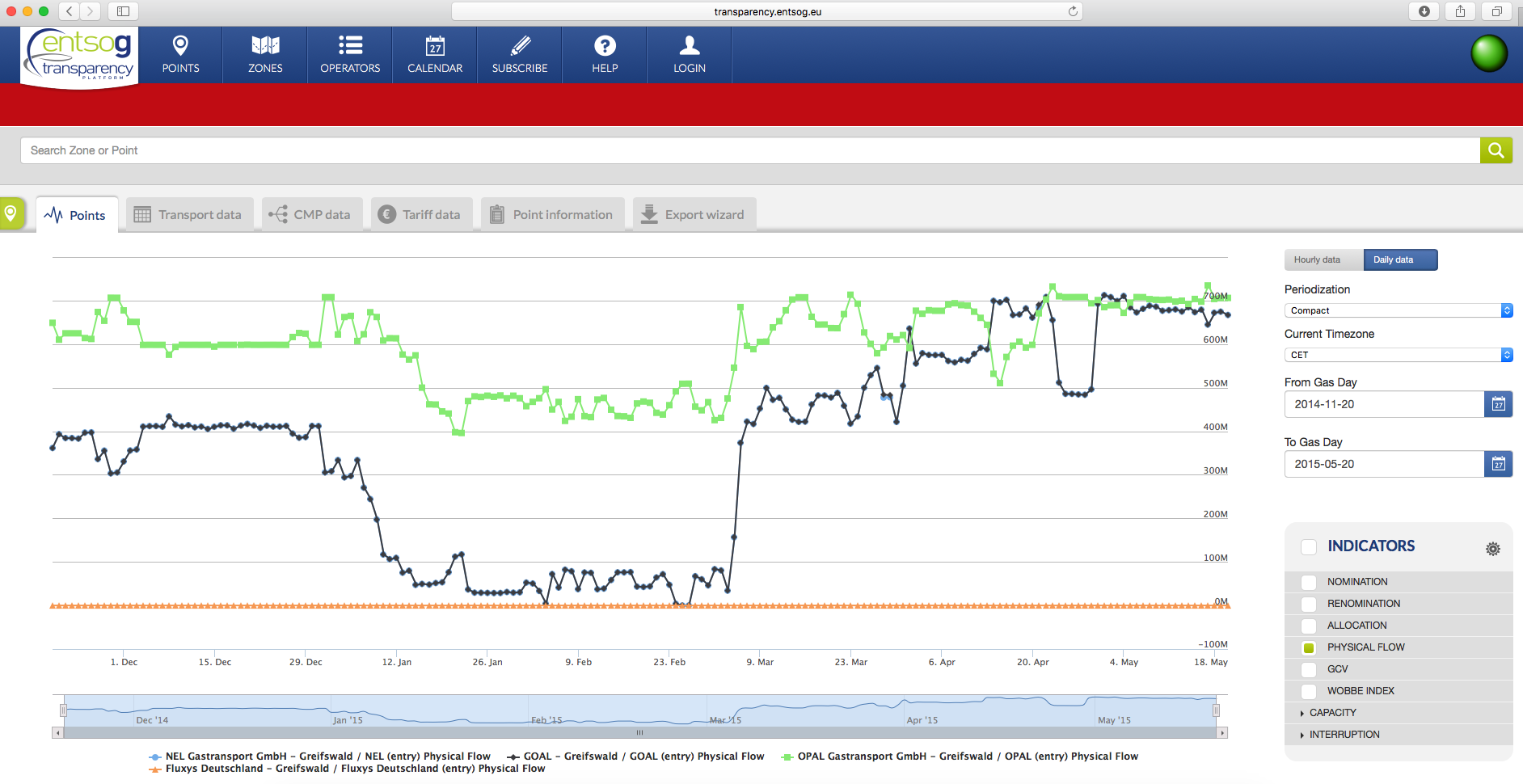
Mikhail Korchemkin of EEGA (East European Gas Analysis) summarizes the the outlook of domestic gas production and gas demand in Europe and the impact Nord Stream 2 will have especiall on CSEE countries if pipelines through Ukraine are decommissioned:
"And Putin himself may be a bigger danger.
The history of Nord Stream 1, which terminates in Germany just as the
Nord Stream 2 pipeline is planned to do, demonstrates that he’s more
than willing to use pipelines for political leverage. After the
commissioning of Nord Stream 1, he wanted to keep a tight grip on gas
supplies to Ukraine, reducing them when the country angered him—either
by cutting off some lines or hiking prices. But when Europe announced
that it would resell Russian gas back to Ukraine at a lower price than
Russia had offered, Putin got angry and in June 2014 threatened
to punish the involved parties—Austrian, German, and Slovakian firms—by
reducing the supply of Russian gas to their home countries.
Despite Putin’s threat, the reverse gas sales went on. Believing that
European consumers would be unlikely to notice any change of gas supply
in the summer, Putin waited until the fall and ordered Gazprom to cut daily flows of Russian gas to Europe via Ukraine by 50 percent. In January 2015, the same reduction
was applied its exports to Germany via the new and reliable Nord Stream
1. The case was never taken to arbitration court, and Putin acted as
the judge and executioner.
As reported
by Russia’s state news agency Interfax, that gambit resulted in a loss
of $5.5 billion in revenue for Gazprom and fines of $400 million.
Unfortunately for the Kremlin, the winter was warm, and the deficit in
Europe was compensated by increased supplies from Norway. But for Putin,
this matter was much more important than $6 billion and the reputation
of Nord Stream. For him, being able to demonstrate that he could cut off
supply to Europe on a whim was key. And now, with his pipeline plans
fulfilled, he would be able to quickly cut off over 80 percent of the supply of Russian gas to the European Union on short notice."
You can read the rest of the piece in Foreign Policy via the below link:
https://foreignpolicy.com/2019/10/07/gazproms-nord-stream-2-will-help-putin-cut-off-natural-gas-supplies-to-europe/
German computer scientist and physicist Rainer Klute makes a case for the comeback of nuclear in an op-ed piece in german weekly paper "Die Zeit". He emphasises the use of nuclear waste for the operation of fast reactors.
"Deutschland braucht neue Atomkraftwerke.
Atomkraft?
In Deutschland? Ist dieses Thema nicht spätestens mit dem
Ausstiegsbeschluss von 2011 endgültig erledigt? Warum sollte sich das
Land wieder Diskussionen über Kernenergie antun? Ganz einfach: Weil wir
mit der CO₂-Bepreisung allein das Klima nicht retten werden. Und: Weil
Physiker und Ingenieure in den vergangenen Jahren, unbemerkt von einer
atomhysterischen Öffentlichkeit, gewaltige Fortschritte gemacht haben.
Inzwischen gibt es
moderne Reaktoren, die Energie aus bereits angefallenem "Atommüll"
gewinnen können. Allein aus den gebrauchten Brennelementen in den
verschiedenen Zwischenlagern könnte Deutschland 250 Jahre lang komplett
mit Strom versorgt werden. Die Reaktoren der sogenannten Generation IV
würden damit nicht nur die Endlagerfrage lösen, sie würden auch die
Menge des nutzbaren Urans um das 50- bis 80-Fache strecken, sodass es
für Zehntausende Jahre Stromerzeugung reichen würde – und das alles
klimafreundlich und emissionsfrei."
You can read the rest of the piece via the below link:
https://www.zeit.de/2019/41/kernkraftwerke-atomkraft-energiewende-atommuell/komplettansicht
A study of Institut der deutschen Wirtschaft using data of the Deutsche Rohstoffagentur has predicted that key commodities for batteries can run short and hence jeopardise the electromobility goals of the german government.
Demand for lithium-ion batteries will increase 14- to 24-fold in 2026 compared to 2016. The deposits of the commodities, such as cobalt, are often concentrated in instable and/or hostile countries like the Republic of the Congo, Russia or Cuba.
"Mit der Nachfrage nach Lithium-Ionen-Batterien steigt die Nachfrage nach
Kobalt. Kobalt ist unverzichtbarer, zentraler Bestandteil von Lithium-Ionen-Batterien.
Das IW ordnet Kobalt in seiner Studie der „Roten Gruppe“ zu. Darin
listet das Institut solche Rohstoffe auf, deren Beschaffung aufgrund der
statistischen Reichweite, der starken Konzentration der Vorkommen in
wenigen Ländern, der Gefahr des strategischen Einsatzes und der
fehlenden Substituierbarkeit schwierig werden könnte.
Innerhalb der „Roten Gruppe“ belegt Kobalt den ersten Platz und ist
damit der Rohstoff mit dem höchsten Risikowert. „Die hohe Konzentration
von Förderung und Vorkommen in Risikoländern wie der Demokratischen
Republik Kongo, Russland und Kuba spielt für die hohe Risikobewertung
eine wichtige Rolle“, heißt es in der Studie.
Für die deutsche
Wirtschaft sei „Kobalt ein entscheidender Rohstoff für die Realisierung
der Ziele im Bereich der Elektromobilität“, heißt es in der Studie
weiter. Dies gelte unabhängig davon, ob die Batteriezellfertigung in Deutschland stattfinde oder fertige Batteriezellen importiert würden.
Die Plätze zwei und drei in der „Roten Gruppe“ belegen in der IW-Studie
Tantal und Gallium. Es folgen Wolfram, Niob und Rhodium. Niob wird
ähnlich wie Tantal und Wolfram in der Stahlindustrie zur Veredlung und
Optimierung des Stahls eingesetzt. Rhodium findet in Katalysatoren und
Brennstoffzellen Verwendung.
Die Konzentration einzelner Rohstoffe auf wenige Förderländer berge
besondere Gefahren, wenn die Förderländer politisch oder wirtschaftlich
instabil seien, keine verlässlichen Institutionen aufwiesen oder eine
strategische Verknappung des Rohstoffangebotes drohe, schreiben die
Autoren der IW-Studie. Während die geografische Lage der Vorkommen nicht
zu beeinflussen sei, erhöhe die Zunahme handelspolitischer Konflikte
und eine weltweit stärker konfrontative politische Situation insgesamt
die Risiken."
You can read the rest of the piece via the below link:
https://www.handelsblatt.com/politik/deutschland/elektromobilitaet-studie-warnt-dass-batterie-rohstoffe-knapp-werden-koennten/25074972.html?ticket=ST-36536567-ci5Kga73zyfIMZ5T0jXR-ap1